Worktop details
The details that make a worktop
Colour gets all the attention, but the edges, sink, upstands and splashbacks decide how the finished kitchen looks and works. Here are the options, what each involves and which ones add to the price.
Edges
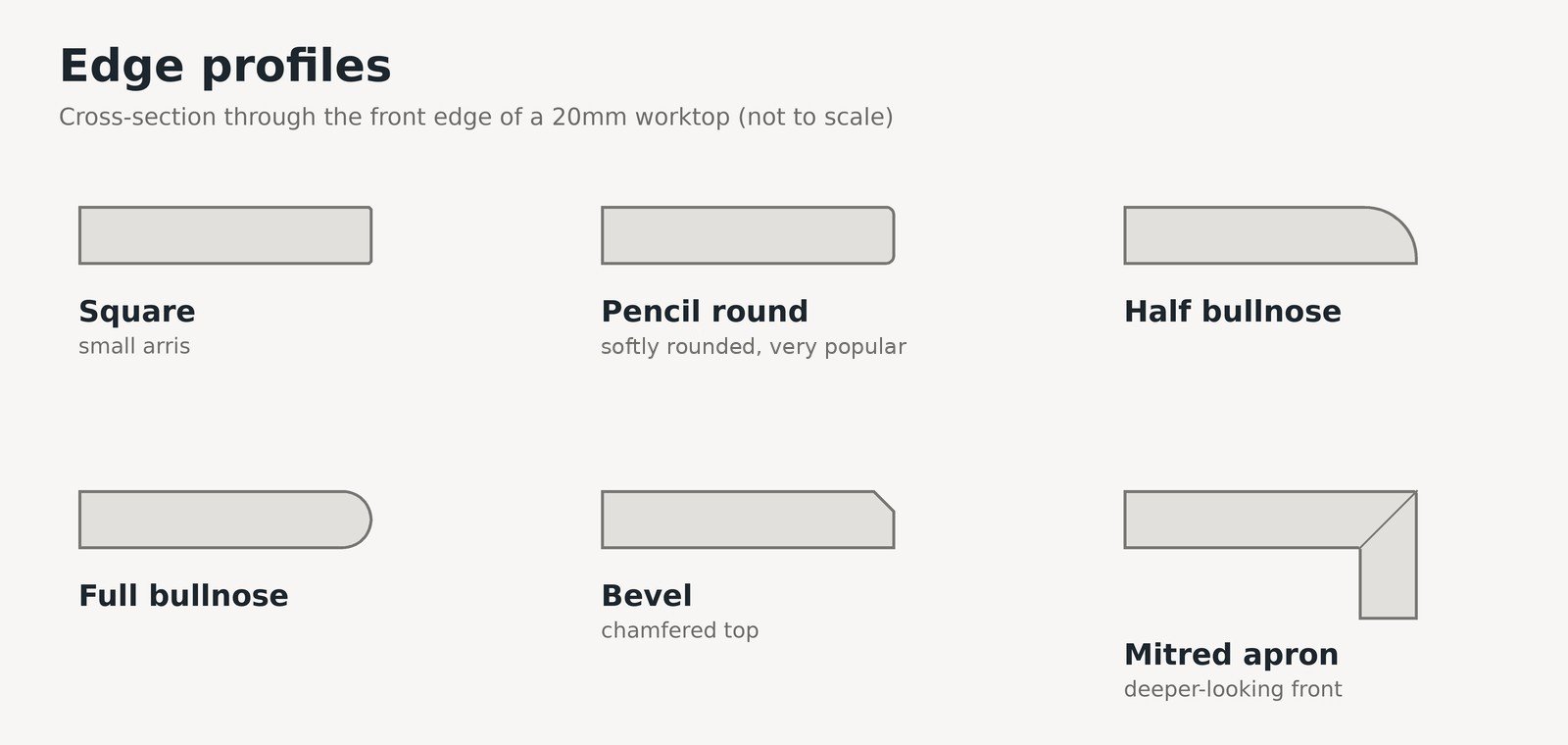
Edge profiles
The edge is the part of the worktop you touch most, and it changes the look more than people expect.
Pencil round is a small, soft radius that is comfortable to lean on and hides minor knocks well. Square gives a crisp, modern line. Fuller profiles like bullnose suit more traditional kitchens.
A mitred apron joins a strip of quartz under the front edge so a 20mm worktop looks much thicker. It takes extra material and fabrication, so it costs more.
Sinks
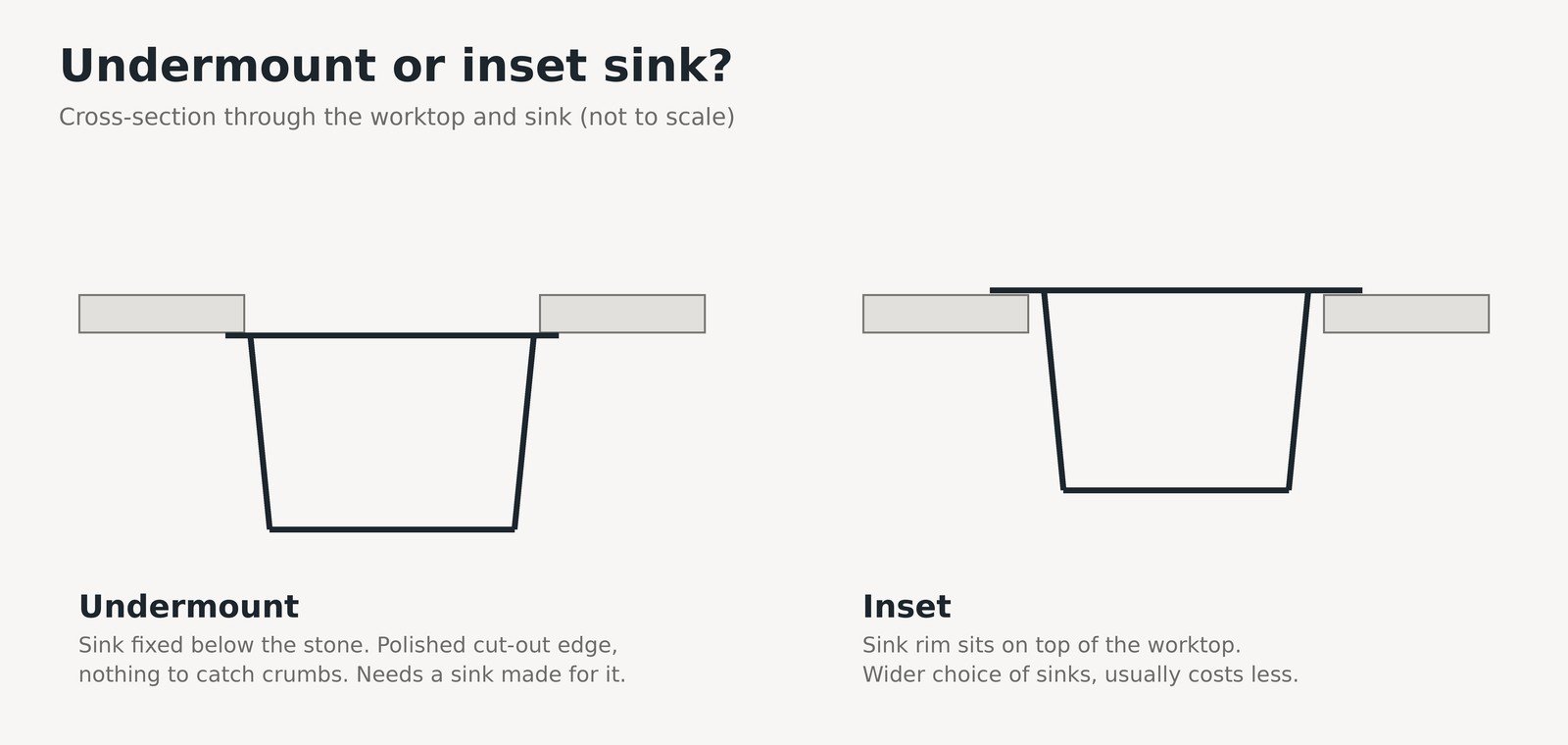
Undermount or inset sink?
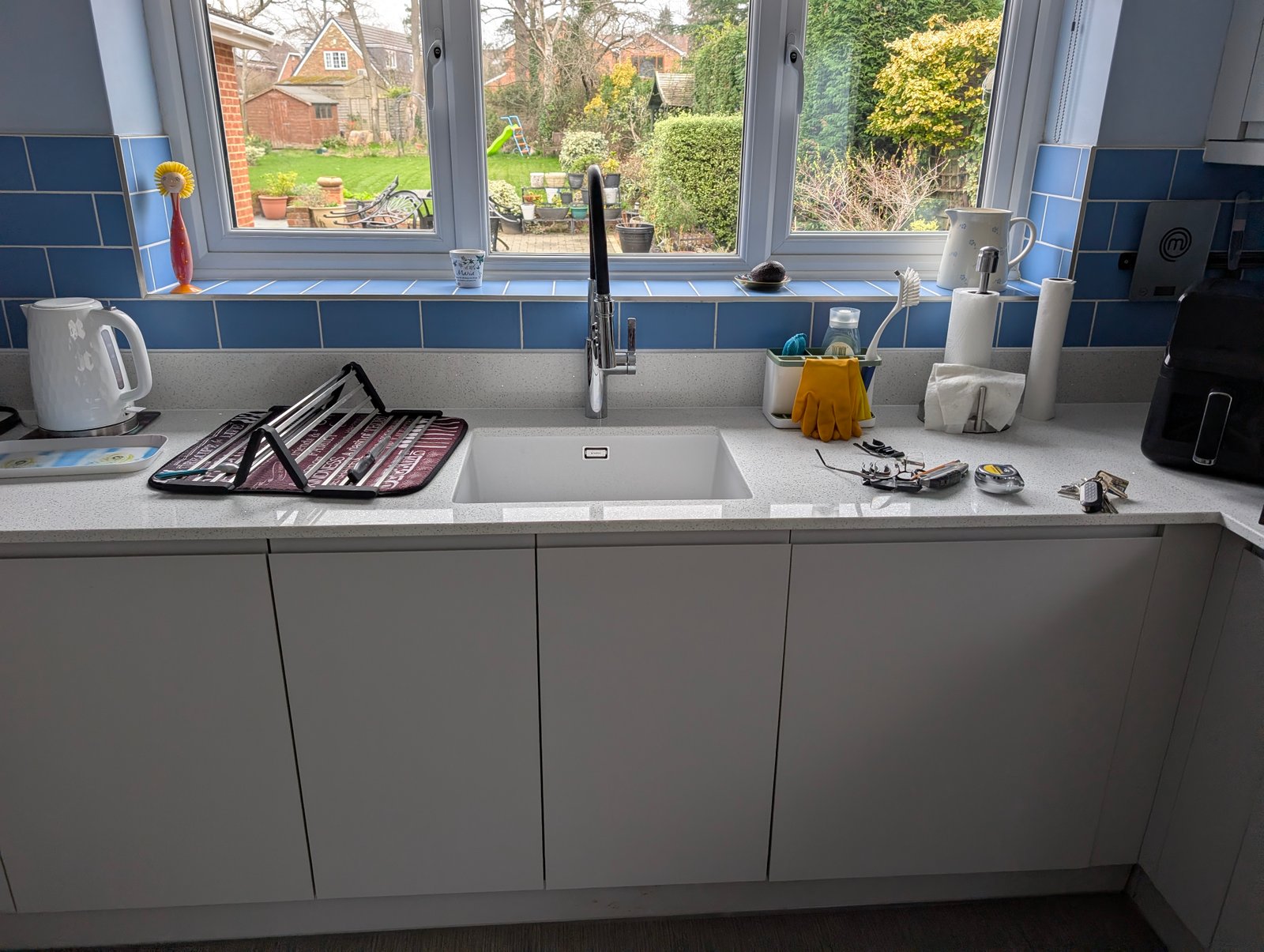
An undermount sink is fixed beneath the quartz, so the cut-out edge is polished and you can wipe crumbs straight into the bowl. It needs a sink designed to be undermounted, and the exact sink must be agreed before templating.
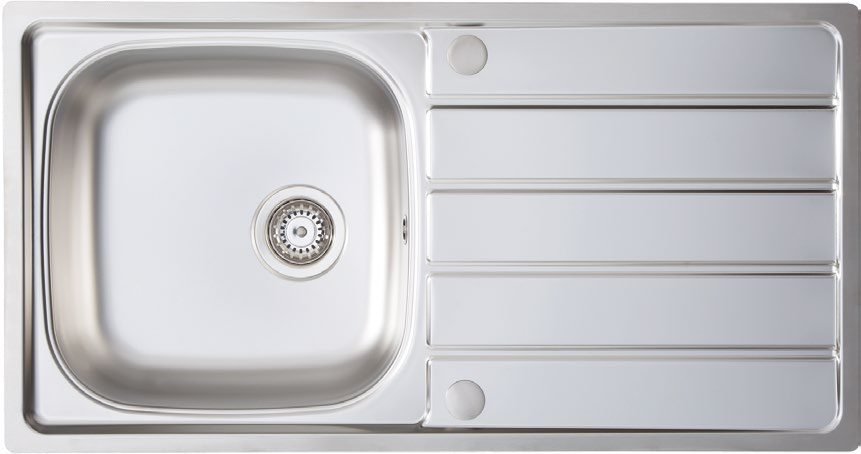
An inset sink drops in from above and its rim sits on the worktop. There is a wider choice of sinks, it usually costs less, and it is simpler to change later.
Drainer grooves can be cut into the quartz beside an undermount sink. They are handy, but they need regular wiping to stop limescale building up, and some people prefer a plain surface with a drainer tray.
Walls
Upstands, splashbacks and full-height splashbacks
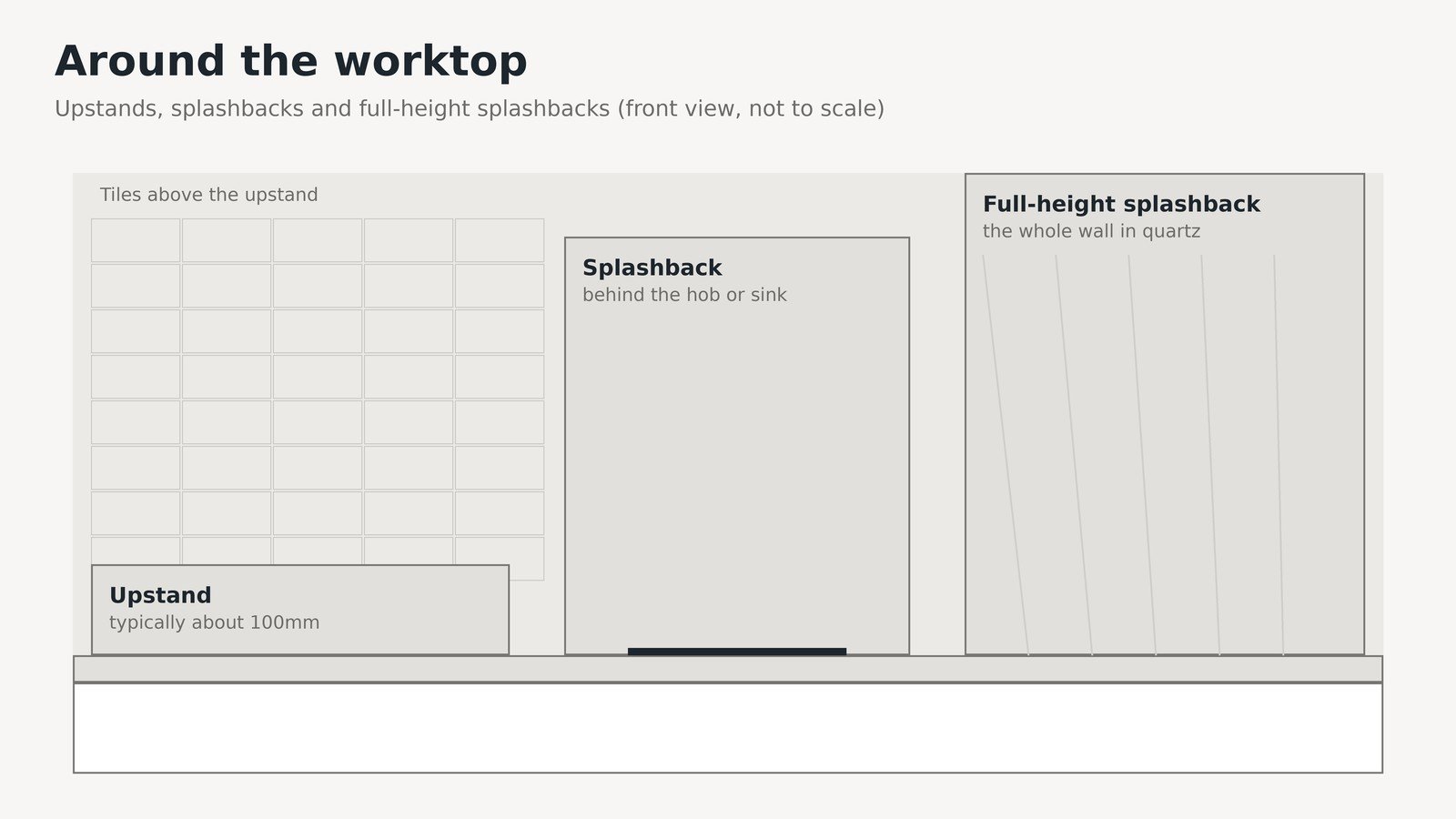
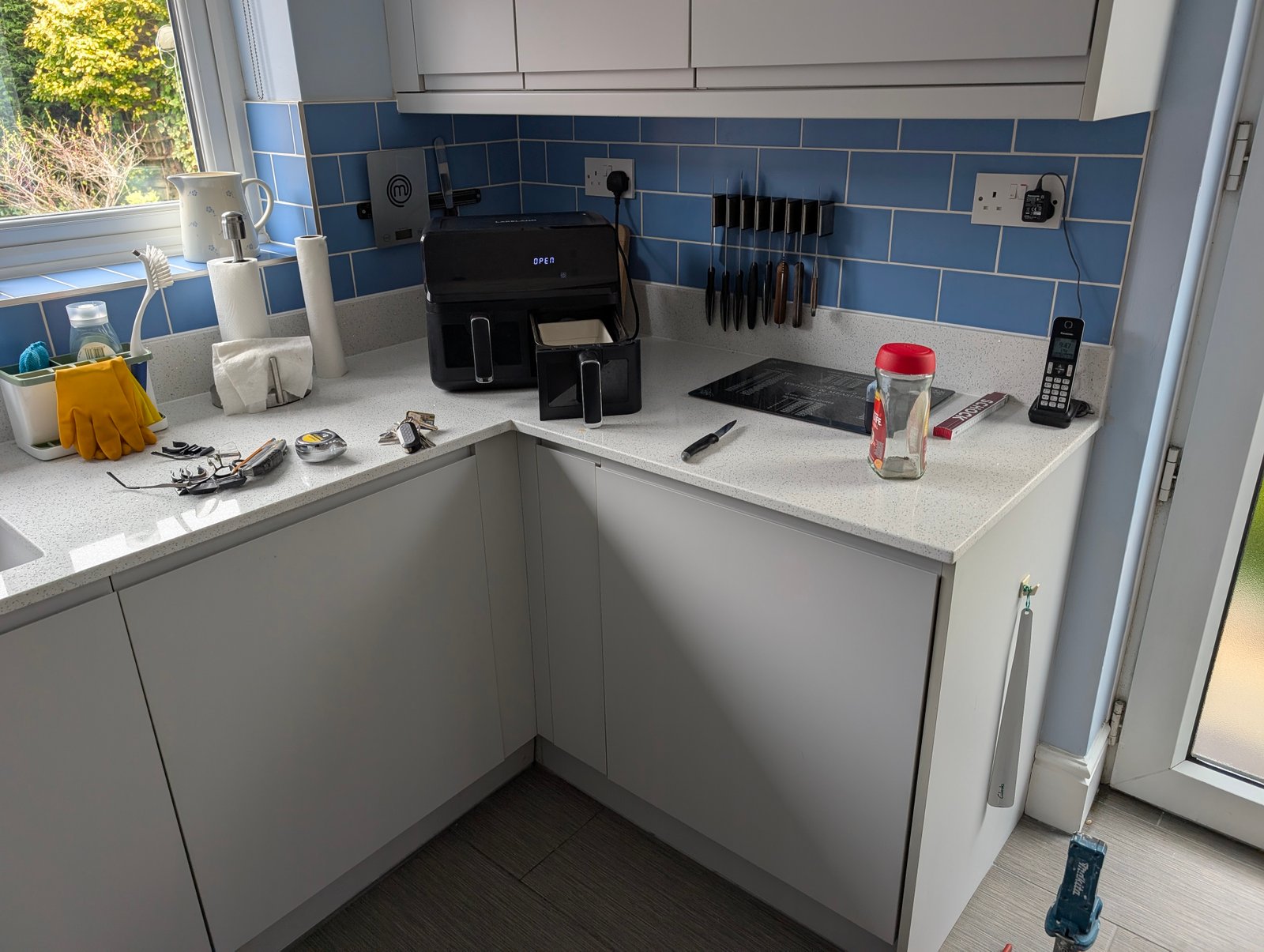
Upstands are short strips of quartz, typically about 100mm, that seal the join between worktop and wall. They are also the usual answer when thinner quartz replaces thicker laminate and leaves a gap below the tiles.
A splashback is a taller panel behind the hob or sink, easier to clean than grout. Quartz does not like direct, intense heat, so behind a gas hob we check the hob maker’s clearances before recommending it.
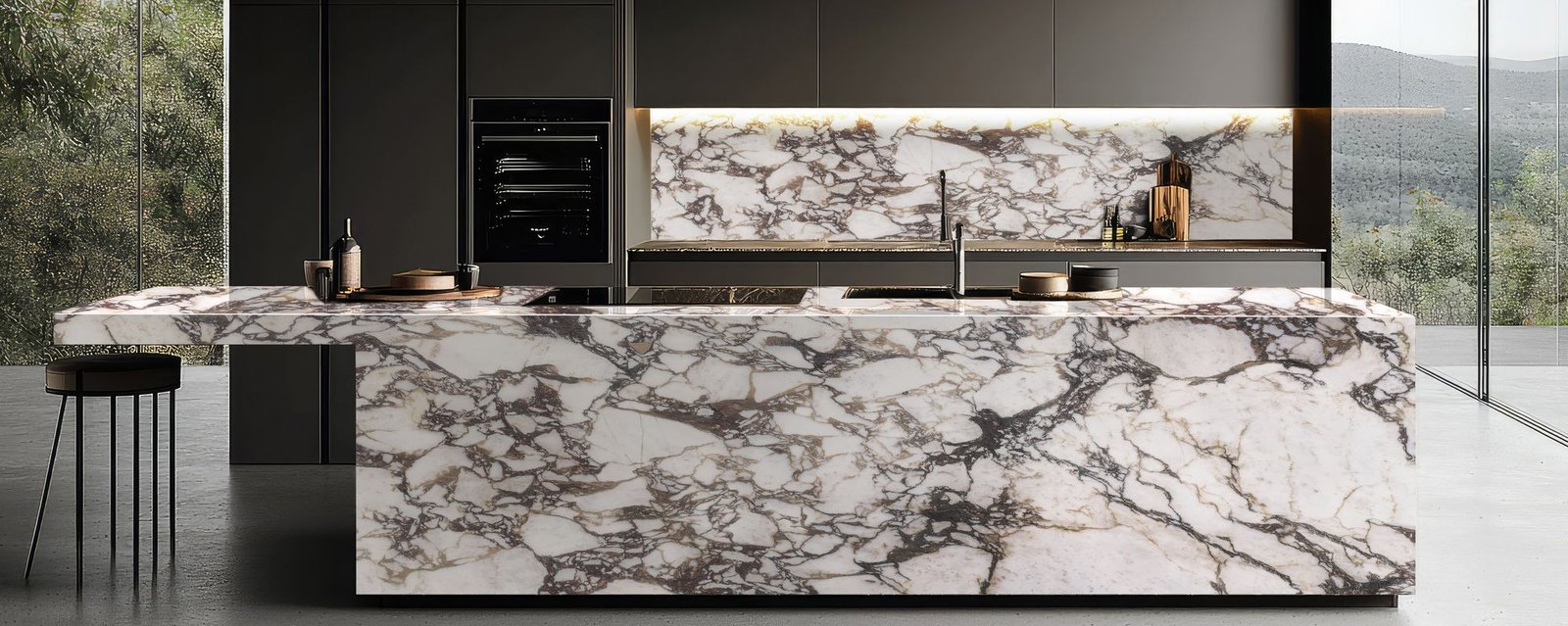
A full-height splashback takes the quartz all the way up the wall, for a seamless, dramatic look. Slabs are 3200 × 1600mm, so larger walls may need a joint, and sockets and switches need cut-outs. We plan joint positions with you so the veining flows as well as it can.
Islands
Waterfall ends
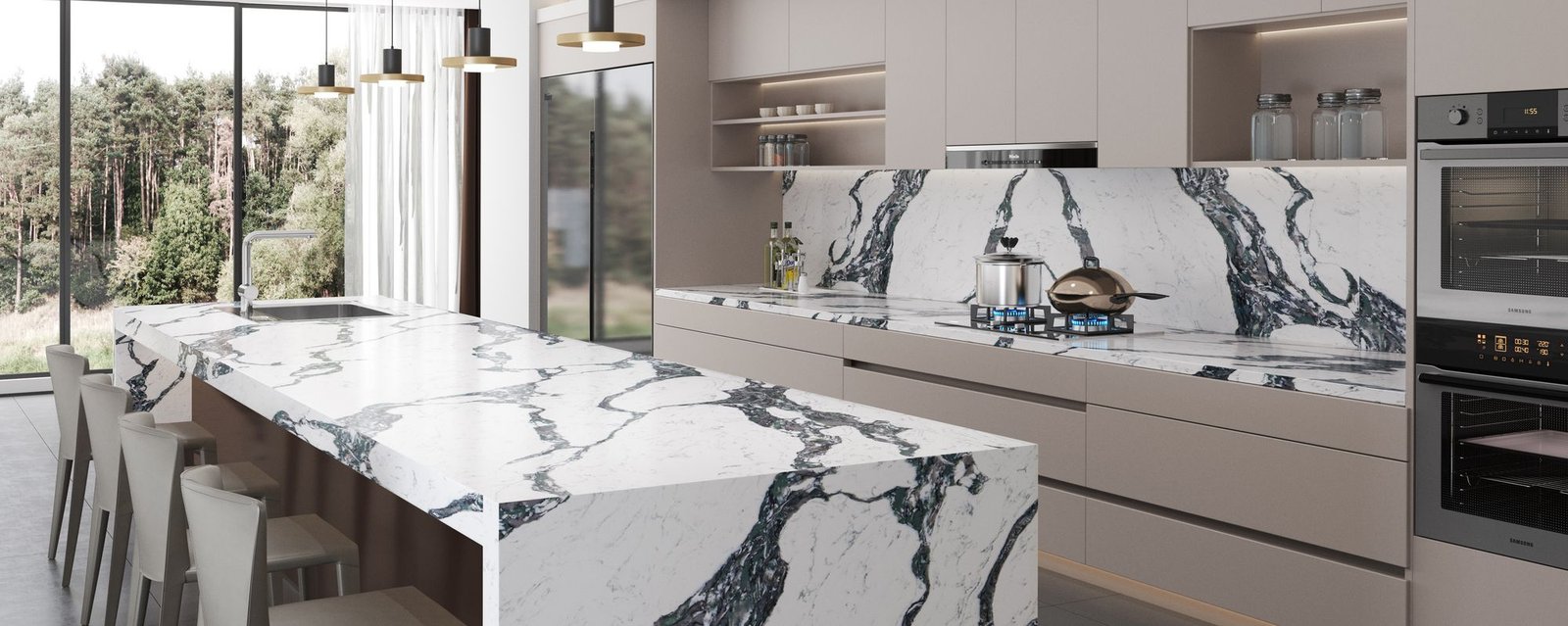
A waterfall end carries the worktop down the side of an island or run to the floor, with a mitred joint at the corner. It protects the cabinet end and makes the island a feature.
It uses extra quartz and careful fabrication so the veining turns the corner, so it adds to the price. On a bold, veined colour it is worth seeing where the joint and veins will fall before you commit.
Other details worth asking about
Window sills
A quartz window sill behind the sink matches the worktop and copes with water far better than painted wood. It can sometimes be cut from offcuts of your slabs, which keeps the cost down.
Breakfast bar overhangs
Quartz can overhang a run or island for seating, but longer overhangs need hidden support. We’ll tell you what your layout needs before you commit.
Joints
Slabs are 3200mm long, so long runs and L-shapes need joints. We place them where they are least visible and colour-match the resin, and we’ll show you where they will be.
Not sure what you need?
We’ll talk through every one of these details at your free survey, with samples in hand.